Quick Links
-
The Company Behind The Geneva: A History Of Bufori
-
The Malaysian Automotive Industry: An Overview
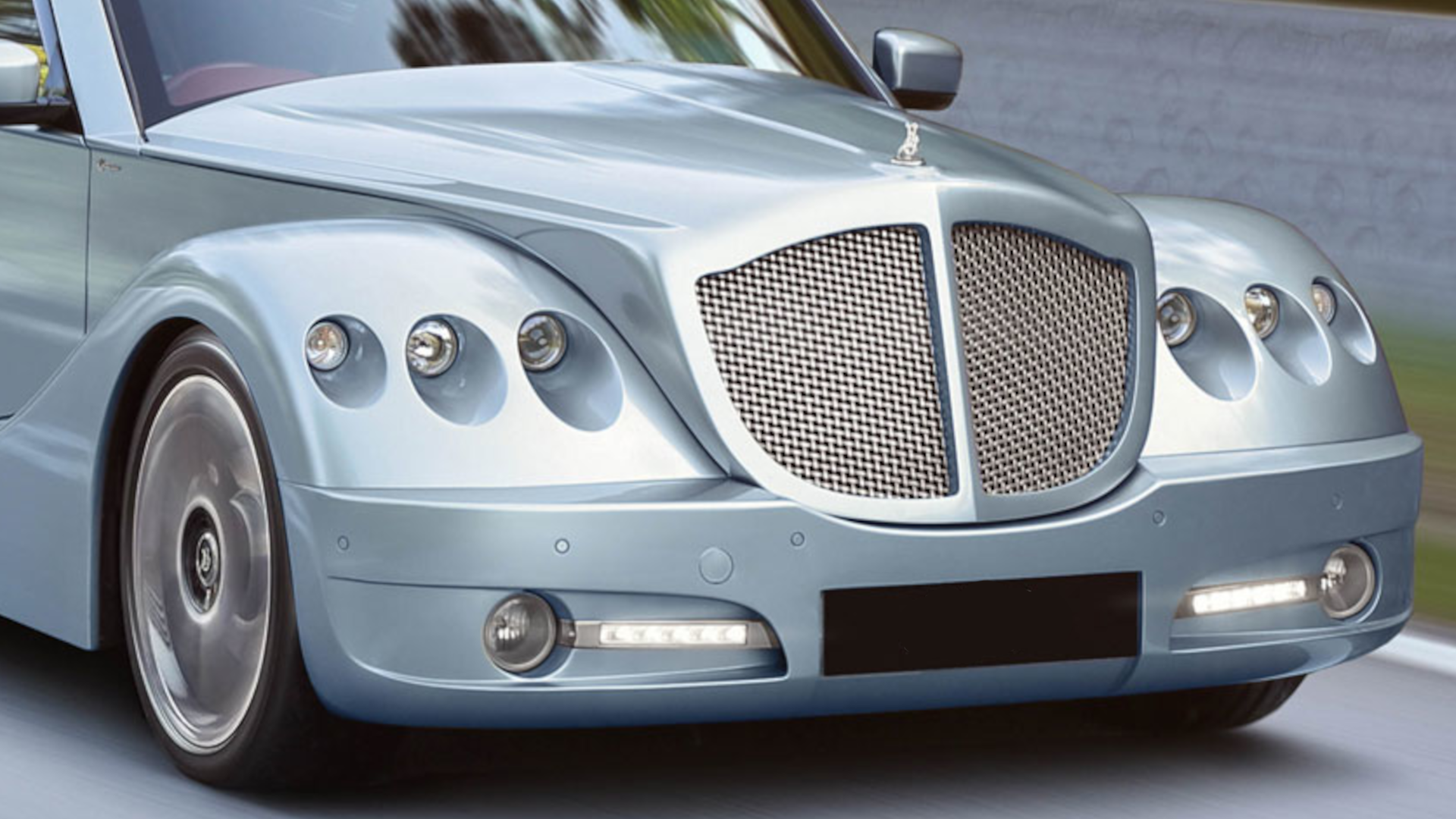
Paying homage to eras gone by is a favorite pastime of the automotive industry. From retro-inspired concept cars to updated versions of beloved classics, the allure of nostalgia is strong among car enthusiasts. One example of this is a car that even die-hard gearheads may not have heard of: the Bufori Geneva, a Malaysian luxury car with a low production volume.
The Geneva is a bizarre homage to luxury cars from the early decades of automotive history, mainly from the 20s and 30s: the result is strange to say the least, with the car sporting a cartoon-like, exaggerated style. Let’s take a closer look at this unique creation.
Meet The Bufori Geneva
|
Bufori Geneva Specs |
|
|
Engine |
6.4-liter V8 |
|
Power |
470 hp |
|
Transmission |
8-speed automatic |
|
Year Released |
2010 |
The Geneva is the only model currently being produced by Bufori. It was introduced in 2010 at the Geneva Motor Show, which is where the model’s name comes from. The car’s design is a mishmash of features that call to mind anything from a Morgan to a Rolls-Royce.
The rear doors are rear-hinged for ease of access to the back seats, a feature commonly associated with ultra-luxury cars of the 1930s (and carried over into the present day by brands that draw heavily on their historical design legacy, such as Rolls-Royce).
The Geneva has undergone a change of powertrain in the last decade and a half. Initially, power came from a 6.1-liter Chrysler Hemi V8 engine producing 430 hp; however this was later changed to a 6.4-liter V8, which produced 470 hp. The Geneva is also equipped with an eight-speed automatic transmission, Brembo brakes, and a variety of ADAS (Advanced Driver Assistance System) features, such as forward collision warning, blind spot monitoring, and lane departure warning with lane assist.
One of the leading marketing points of the Geneva is its ability to be customized according to the buyer’s wishes. A wide range of luxury and comfort features are available to choose from. The rear center console has the capability to accommodate a variety of devices and options: these include a mini-fridge, a cigar humidor, a Chinese tea set with boiling water, or a mini-bar. The seats are heated, cooled, and electrically adjustable, with a built-in massage device for ultimate comfort on the go. Passenger comfort is not just ensured by the interior features, but also by the car’s air suspension which provides a cushioned ride.
The Company Behind The Geneva: A History Of Bufori
Bufori was founded by three Australian-Lebanese brothers: Anthony, George, and Gerry Khouri. The company’s origins can be traced back to three cars Gerry built in his own garage in 1986: one for each brother. When the time came to find a name for the new business venture, the brothers got creative and came up with an original, if slightly bizarre, acronym. Bufori stands for “Beautiful, Unique, Funtastic, Original, Romantic, Irresistible”, representing the characteristics that the three brothers wanted their cars to possess.
For the first 12 years of the company’s existence, all operations including sales and manufacturing were carried out in Australia. However, from 1998 onwards, the company began to establish a bigger presence in Malaysia. That year, production moved in full to a brand new factory, situated in Kepong, a suburb of Kuala Lumpur, Malaysia’s capital.
All Bufori cars are built by hand with a 25-step production process, thanks to the work of 108 skilled technicians. They are also made to order and customized according to each customer’s preference. The company has produced seven vehicles so far; the Bufori – the only one currently in production – is due to be joined by a second sports car in the near future; However, at this stage details are still thin on the ground.
Other Bufori Models
The Geneva is Bufori’s longest-lasting model so far, however the company has produced several other cars over the course of its history. All of them have one thing in common: their vintage-inspired design language, which combines and exaggerates features borrowed from 1920s and 1930s cars.
When Bufori was founded in 1986, the company’s first model was unveiled: the Madison, a two-seater convertible. The Madison was powered by a 1.6-liter four-cylinder boxer engine sourced from Volkswagen, which sent power to the rear wheels via a five-speed manual transmission. It was only produced for two years, being discontinued in 1988.
The Madison was followed by another two-seat convertible, the MK I, which arrived in 1988. This model was powered by a range of Volkswagen boxer engines; a manual and automatic transmission were both available. When the MK I was discontinued in 1992, two other models joined the brand’s lineup: the V6i and the MK II.
The former was a convertible with a 2+2 seat layout. It was powered by a 3.8-liter V6 engine sourced from Buick, which sent power to the rear wheels. The latter was a successor to the MK I, offered in two- and four-seat convertible form. It was powered by a range of boxer engines sourced from Subaru, going from 1.8 to 2.2 liters, and offered an automatic or manual transmission.
The two most recent models aside from the Geneva were the La Joya and the BMS R1. The La Joya had a longer lifespan than other models, being in production between 2004 and 2018. It was a two-seater coupe, powered by a 2.7-liter V6 engine sourced from Hyundai. The BMS R1 arrived in 2009, just a year before the Geneva; it was built in collaboration with racing team Axle Motorsport. It is a race-oriented version of a road car that still has not been launched, the Bufori CS.
The Malaysian Automotive Industry: An Overview
As an Australian-Malaysian company, with vehicle production taking place in Malaysia since the turn of the millennium, Bufori is a large component of the Malaysian automotive industry. The company is one of just five active automakers based in the country, the others being Proton, Modenas (which focuses on motorcycles), Perodua, and TD Cars.
Malaysia’s history with cars began in the early 1900s, when American and European manufacturers began importing and selling cars in the country. American companies initially dominated the market, thanks to their lower costs. Ford was the biggest player in the Malaysian market for several years, establishing a presence in the country from 1909 and setting up a local division, the Ford Motor Company of Malaya, in 1926. Around this time, General Motors also attempted to establish a local presence, but was not successful.
Japanese cars began to arrive in the country from the late 1950s onwards. Initially met with a poor reception, due to anti-Japanese sentiment in the area and a perception of Japanese cars as lightweight and cheaply made, eventually they gained popularity with drivers in Malaysia and took over the local market.
During the second half of the 20th century, local manufacturers began to emerge. Proton was established in 1983, and remained the only Malaysian budget car company until Perodua in 1993. Proton started out by selling rebadged versions of Mitsubishi models, and only began designing its own cars in 2000. Ever since, Proton’s offering has included both badge-engineered and locally designed vehicles.
Perodua has now overtaken Proton as Malaysia’s largest car manufacturer. Alongside local companies, Malaysia is also home to several manufacturing plants and local divisions of global manufacturers; Honda and Volvo both have factories in the country. Subaru, Mitsubishi, Renault, and Nissan import kits which are then assembled locally, through the Tan Chong Motor company.
Sources: Bufori, Proton