Modern Mercedes models promise cutting-edge tech and premium refinement, but some have brought owners more headaches than horsepower.
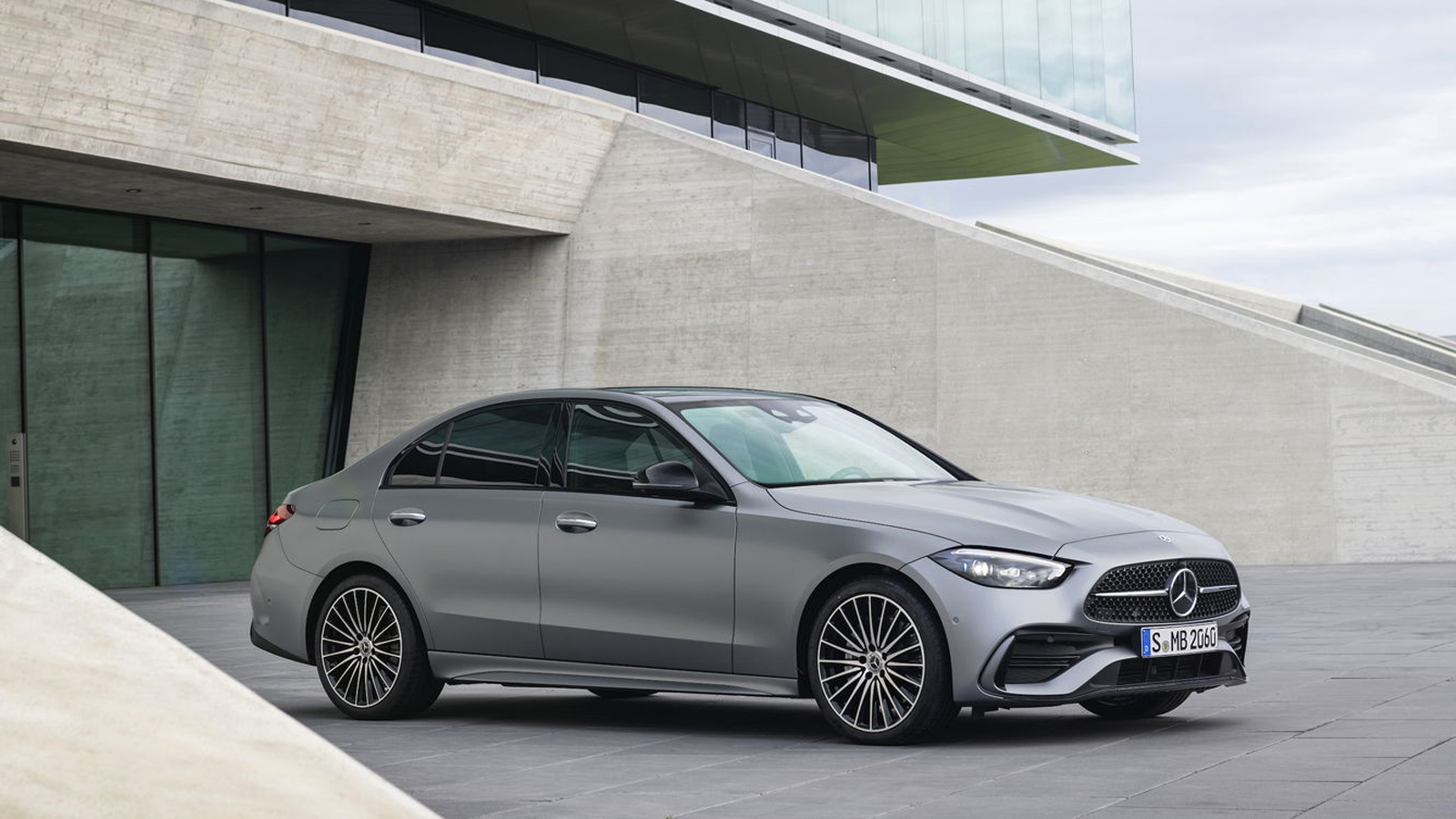
Mercedes-Benz C-Class (W206, 2022–Present)
Problem: Electronics and build-quality regressions
The W206 C-Class arrived as a tech-forward mini S-Class, but early ownership reports quickly exposed cracks beneath the gloss. The Google-based MBUX system has been prone to freezing, random reboots, and camera failures, particularly in early production cars. Owners have also reported creaks from interior trim, inconsistent panel gaps, and steering-wheel touch controls that fail intermittently.
More concerning is the reliance on a 48-volt mild-hybrid system across the lineup. Starter-generator faults and battery-related warning lights have led to dealer visits that often end in software updates rather than permanent fixes.
What actually goes wrong:
- Infotainment instability
- Steering wheel control failures
- 48V electrical faults
- Interior quality complaints
Mercedes-AMG C43 / C63 (W206, 2023–Present)
Problem: Complexity without durability proof
AMG’s shift away from V8s hit these models hardest. The turbocharged four-cylinder paired with electric assistance delivers big numbers on paper, but real-world reliability has been less convincing. Owners have reported drivetrain warning lights, inconsistent power delivery, and cooling-system alerts—especially in hot climates or spirited use.
The C63’s F1-inspired rear-mounted hybrid battery adds further complexity, increasing both weight and potential failure points. Long-term durability remains an open question, but early reliability confidence is already shaky.
What actually goes wrong:
- Hybrid system faults
- Drivetrain error messages
- Cooling-related issues
- Dealer dependency for software resets
Mercedes-Benz S-Class (W223, 2021–Present)
Problem: Too much tech, too little margin for error
The W223 S-Class is among the most technologically ambitious sedans ever sold, which is precisely the issue. Owners have reported failures involving rear-wheel steering actuators, air suspension components, and MBUX screen malfunctions. Over-the-air updates sometimes fix one issue while introducing another.
This generation also suffers from a recurring theme: minor faults that disable major systems. A single sensor failure can trigger cascading warning lights, forcing dealer intervention even when drivability isn’t affected.
What actually goes wrong:
- Air suspension faults
- Rear-wheel steering issues
- Infotainment and screen failures
- Sensor-triggered system shutdowns
Mercedes-Benz EQS / EQE (2022–Present)
Problem: Software maturity lagging behind hardware
Mercedes’ flagship EVs are impressively engineered, but their software ecosystem hasn’t kept pace. Early EQS models were plagued by slow boot times, navigation glitches, charging errors, and unreliable driver-assist features. While updates have improved stability, many owners still report inconsistent performance from core systems.
The hyperscreen, while visually striking, has proven vulnerable to glitches that affect climate control, audio, and even basic vehicle settings.
What actually goes wrong:
- Infotainment lag and freezes
- Charging system errors
- Driver-assist inconsistencies
- Hyperscreen-related failures
Mercedes-Benz GLE / GLS (Facelift Models, 2023–Present)
Problem: Powertrain and suspension reliability
Updated GLE and GLS models continue to struggle with air suspension durability, particularly in higher-mileage examples. Mild-hybrid systems have introduced new failure modes, including rough restarts and electrical warning messages.
Transmission behavior, especially hesitation at low speeds, has also been a recurring complaint, often addressed through software updates rather than mechanical fixes.
What actually goes wrong:
- Air suspension leaks or compressor failures
- Mild-hybrid electrical issues
- Transmission hesitation
- Repeated software updates
Mercedes-AMG GT 4-Door Coupe (2019–Present)
Problem: Super-sedan complexity meets real-world use
The AMG GT 4-Door combines extreme performance with luxury-car expectations, and that overlap has exposed weak points. Owners report suspension faults, electronic steering issues, and cooling-system warnings, particularly in V8 variants driven hard.
Repair costs are substantial, and many issues are labor-intensive rather than parts-related, amplifying out-of-warranty ownership risk.
What actually goes wrong:
- Suspension and steering faults
- Cooling system warnings
- High repair labor costs
- Sensitivity to hard driving conditions
The Bigger Pattern
Across these models, the common thread isn’t catastrophic engine failure; it’s system overload. Mercedes has packed recent vehicles with layered electronics, hybrid components, and software-driven controls that leave little room for tolerance. When things work, they work brilliantly. When they don’t, even minor faults can disable major features.