Prodrive has been the not-so-secret hand behind some of the most iconic race cars, high-performance road cars, and a handful of its own utterly astounding vehicles. A former FIA World Rally Champion navigator, David Richards, and Ian Parry founded the company.
Since its founding, Prodrive has been deeply involved in motorsport, specifically rally, where it produced icons like the Porsche 911 SC/RS and secured its first win in a heavily modified BMW E30 M3. An iconic name in motorsport, Prodrive has also had a hand in some road-legal monsters.
This article focuses on the road cars that Prodrive has, in some shape or form, helped build, which boast impressive performance capabilities. Cars are sorted by production date.
Subaru Impreza P1
Production: 1999–2001
|
Engine |
2.0-liter turbocharged inline-four |
|---|---|
|
Power |
276 hp @ 6,500 rpm |
|
Torque |
253 lb-ft @ 4,000 rpm |
|
0-60 mph |
4.8 seconds |
Of all of Prodrive’s ventures, the Subaru Impreza P1 is arguably one of the most well-known vehicles they’ve ever had a hand in creating, which would be revived by Prodrive decades after its debut. The Subaru Impreza P1 was created to circumvent the fact that cars like the Subaru Impreza STi were not available for purchase outside Japan. Although a handful of independent dealers imported these cars into regions like Europe, the process was a headache, to say the least.
This prompted Prodrive and Subaru to develop a car that could beat the Mitsubishi EVO VI. It was based on the already potent Subaru Impreza WRX STI Type R, but further improved by its exclusive suspension setup and tune. Its suspension system was thoroughly reworked, gaining new dampers and springs, alongside new model-specific bodywork. The result was a Subaru Impreza that was in an entirely different league compared to the standard Subaru Impreza WRX STI.
Aston Martin V8 Vantage Prodrive
Production: 2006–2008
|
Engine |
4.2-liter naturally aspirated V8 |
|---|---|
|
Power |
425 hp @ 7,500 rpm |
|
Torque |
325 lb-ft @ 5,400 rpm |
|
0-60 mph |
4.7 seconds |
Prodrive has an extensive and storied history with Aston Martin in the motorsport world. In 2005, Prodrive’s Aston Martin DBR9 won the 12 Hours of Sebring, and in 2007, Prodrive won the 2007 24 Hours of Le Mans. In that same year, Prodrive introduced a performance package for the Aston Martin V8 Vantage that was separated into four distinct areas that offered improvements to the engine, suspension, wheels, and aerodynamic efficiency. The package extracted an additional 45 hp from its 4.5-liter V8 engine, while its throttle mapping was revised and its exhaust modified.
The suspension system received a medley of Bilstein and Eibach components that improved its handling characteristics. As for wheels, the V8 Vantage gained a set of lighter twin seven alloy wheels, while the changes to the car’s aerodynamics by way of a new front carbon splitter and rear spoiler reduced front-end lift by nearly half. Prodrive’s rendition of the V8 Vantage resulted in a more powerful, lighter, and quicker version. However, its standard counterpart is an impressive performer and is currently selling for the same price as a Mazda Miata.
Mazda RX-8 PZ
Production: 2006
|
Engine |
1.3-liter naturally aspirated twin-rotor |
|---|---|
|
Power |
189–228 hp |
|
Torque |
156 lb-ft |
|
0-60 mph |
6.4 seconds |
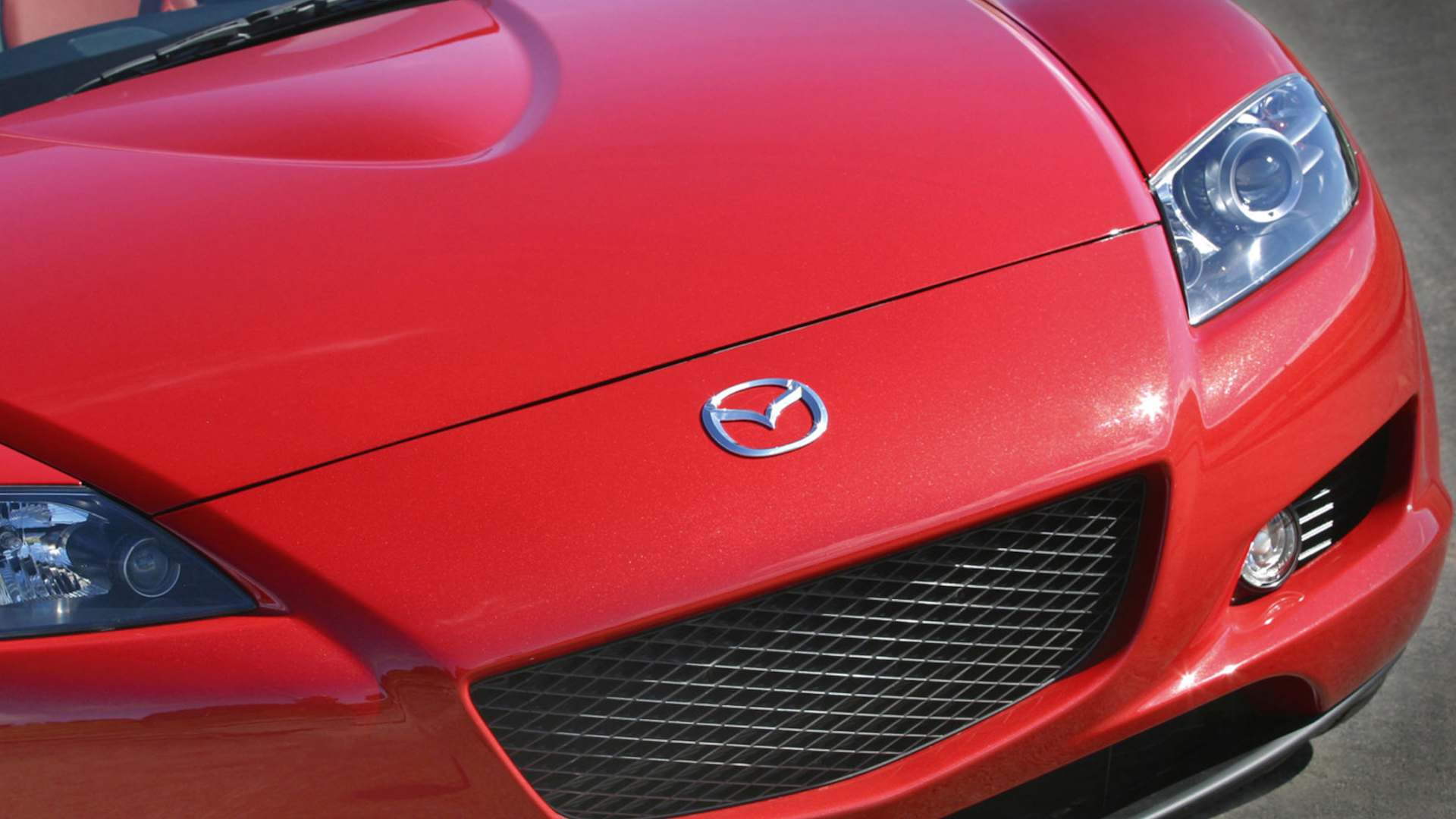
The Alfa Romeo Brera S was exclusive to the UK market, and so was another limited-edition Mazda. In 2006, Prodrive developed a special offshoot of Mazda’s last rotary-powered sports car called the Mazda RX-8 PZ. Like the Brera S, Prodrive’s efforts were focused mainly on handling characteristics. To improve its poise, the Mazda RX-8 PZ featured a significant overhaul of its suspension system, featuring Bilstein dampers and Eibach coil springs, while its spring rate was increased by 60%.
A bespoke twin-exhaust system reported the efforts of an unchanged rotary engine. Other defining qualities include bespoke mirror caps, front and back mesh grilles, and a rear spoiler. It was only available with a six-speed manual transmission and was visually distinguished by its OZ Racing wheels finished in dark silver.
Alfa Romeo Brera S
Produced: 2008–2010
|
Engine |
3.2-liter naturally aspirated V6 |
|---|---|
|
Power |
256 hp @ 6,300 rpm |
|
Torque |
237 lb-ft @ 4,500 rpm |
|
0-60 mph |
7 seconds |
The Alfa Romeo Brera was a mid-size sports 2+2 coupe produced from 2005 up until 2010. In 2008, Alfa Romeo introduced a unique and limited-edition offshoot of the Alfa Romeo Brera with a bespoke selection of hardware that improved its performance capabilities over the standard Alfa Romeo Brera. Dubbed the Alfa Romeo Brera S, it was developed with the help of Prodrive, who were brought in to address issues with the original Brera.
Prodrive’s solution to help improve its handling was a revision of the Brera’s suspension static geometry, along with lighter 19-inch wheels, which allowed for improved handling. The significant overhaul of the suspension system resulted in a version of the Alfa Romeo Brera with dramatically better handling, a lower curb weight, and a unique thrum from its standard V6 engine because of its revised mufflers.
McLaren P1
Production: 2013–2015
|
Engine |
3.8-liter twin-turbocharged hybrid V8 |
|---|---|
|
Power |
903 hp |
|
Torque |
664 lb-ft |
|
0-60 mph |
2.8 seconds |
Many people would be surprised to hear that Prodrive played a role in the McLaren P1’s creation. When developing the McLaren P1, McLaren obsessed over the philosophy of “shrink-wrapping” the P1’s body around its mechanical underpinnings, which meant that there wasn’t a lot of room to accommodate a rear wing that would contribute to more downforce generated than any production car at the time. Prodrive designed the active aerodynamic system that featured an electro-hydraulic rear wing and electro-mechanical front flaps.
This system is capable of employing variable lift and pitch positions to increase the amount of downforce produced to improve handling while decreasing downforce in “DRS” mode to ensure better high-speed stability. This active aero system would be one of the most influential and defining aspects of the McLaren P1, but one incarnation of the McLaren P1 ditched the active aero.
Xiaomi SU7 Ultra
Production: 2024
|
Engine |
Triple motor electric motors |
|---|---|
|
Power |
1,548 hp |
|
Torque |
1,305 lb-ft |
|
0-60 mph |
2 seconds |
You may or may not have heard of the Xiaomi SU7 Ultra. While it does sound like we’ve just named a specific phone model, that name belongs to one of the fastest cars ever to lap the Nürburgring and did what the Lotus Evija couldn’t. However, it is still a prototype for a high-performance variant of the company’s mid-size sedan. Last year, the SU7 Ultra stunned the world by setting a lap time of 6:46.874 minutes, which is an utterly amazing time considering that only a handful of road-legal cars have ever managed to set a time under seven minutes.
Now, Xiaomi and Prodrive have returned to the famed circuit and shaved more than two hundred seconds off of its previous time, further disrupting the performance hierarchy. It’s worth noting, though, that the cars that have been sent around the Green Hell were stripped-out examples with full roll cages akin to the layout of a full-blown race car.
Sources: Prodrive